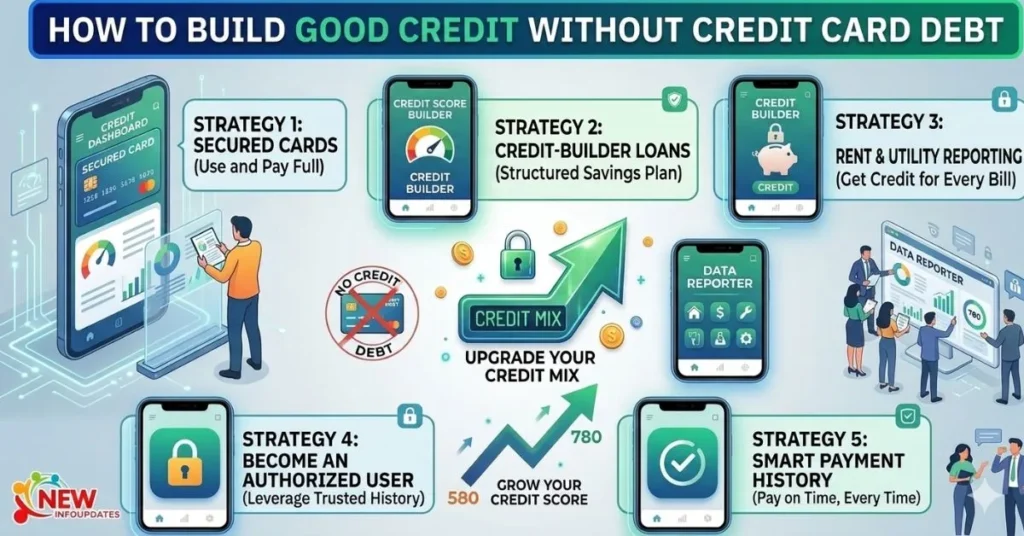

Your credit report tells the details and the credit score shows the result. Both matter for your financial future and help lenders make decisions. They work together. A strong report can support a strong score and good habits can improve both. You are responsible for paying a bill on time. Small mistakes can affect credit. Smart choices can improve it. Many people do not check their credit report often enough. This can be a mistake because reports sometimes contain errors. Good credit can help in many ways. It can make it easier to get a credit card. It can help when applying for a car loan. It can improve your chances of renting an apartment. It may even help you receive lower interest rates. Credit plays a big role.
What Is a Credit Report?
A credit report is a detailed record of your credit history. It contains information about how you have used credit over time.
Your credit report may include:
- Credit card accounts
- Personal loans
- Auto loans
- Mortgage accounts
- Payment history
- Credit limits
- Current balances
- Recent credit applications
This information is stored in your credit file, which is maintained by credit bureaus. Your credit file grows over time as you use credit and make payments.
The three major credit bureaus in the United States are:
- Experian
- Equifax
- TransUnion
These companies collect and update information in your credit file.
What Is a Credit Score?
A credit score is a number to show how to handle the borrowed money. Credit scores show your money habits. Good habits help scores grow. Bad habits can lower them. Paying on time matters and responsible borrowing matters too.
Here is a simple breakdown:
Generally:
- 300–579 = Poor
- 580–669 = Fair
- 670–739 = Good
- 740–799 = Very Good
- 800–850 = Excellent
A higher score shows stronger credit habits. A lower score may make borrowing more difficult.
The credit score boost in USA is widely used by banks, lenders, landlords, and sometimes even employers when making financial decisions.
Credit Report VS Credit Score
| Feature | Credit Report | Credit Score |
| Definition | A detailed record of your credit history | A three-digit number based on your credit history |
| Purpose | Shows complete financial and borrowing information | Gives a quick summary of creditworthiness |
| Format | A report with multiple sections and details | A number, usually between 300 and 850 |
| Information Included | Accounts, loans, payments, balances, inquiries, and credit file details | Calculated from information in the credit report |
| Length | Several pages long | Usually a single number |
| Created By | Credit bureaus such as Experian, Equifax, and TransUnion | Credit scoring models such as FICO and VantageScore |
| Shows Payment History | Yes | No, only reflects the impact of payment history |
| Shows Account Details | Yes | No |
| Shows Credit Inquiries | Yes | No |
| Used By Lenders | To review detailed credit information | To quickly assess credit risk |
| Can Contain Errors | Yes, report errors may occur | Yes, if report data is incorrect |
| Free Access | You may get a free credit report from approved sources | Many banks and apps provide a free credit score |
| Importance | Helps monitor your credit file and financial activity | Helps determine loan approvals and interest rates |
| Updated | When new credit information is reported | Changes when information in the credit report changes |
| Main Benefit | Provides the full story of your credit history | Provides a quick snapshot of your credit health |
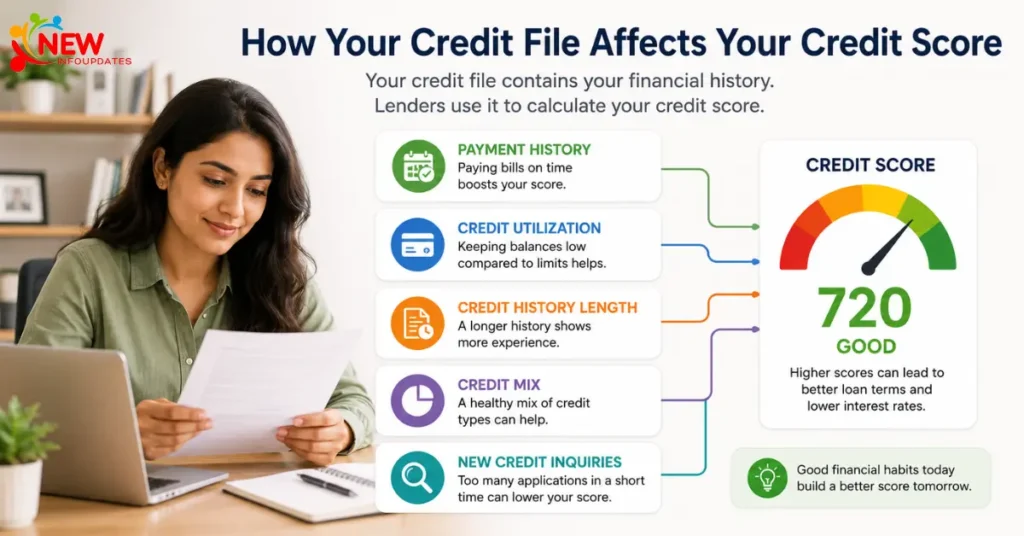
How Your Credit File Affects Your Credit Score
Everything in your credit file can influence your credit score.
Important factors include:
Payment History
Paying bills on time helps your score.
Missing payments can lower it.
Credit Utilization
This measures how much of your available credit you use.
Lower utilization is usually better.
Length of Credit History
Older accounts can help because they show long-term financial responsibility.
New Credit Applications
Applying for several credit accounts at once may lower your score temporarily.
Credit Mix
Having different types of credit accounts may benefit your score.
Why Your Credit Report Matters
Many people focus only on their score, but the report itself is just as important.
Your credit report helps you:
- Monitor financial activity
- Check account information
- Find reporting mistakes
- Detect identity theft
- Understand score changes
Errors in a credit report can sometimes lower a credit score unfairly.
That is why reviewing your report regularly is important.
How to Get a Free Credit Report
- Consumers can often access a free credit report through authorized services and credit bureaus.
- Check your report regularly.
- Review every section carefully.
- Good credit starts with good monitoring.
- A free credit report allows you to verify that all information in your credit file is accurate and up to date.
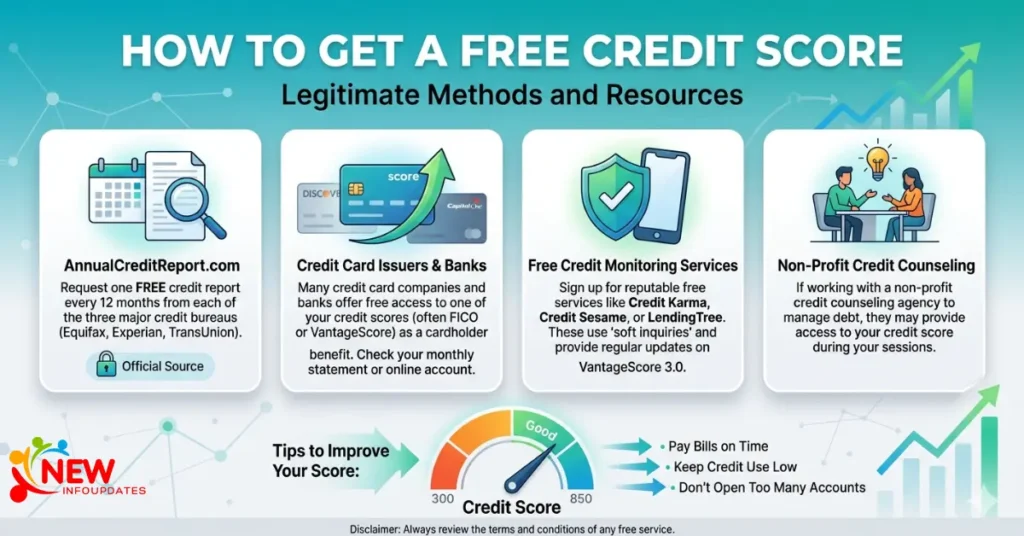
How to Get a Free Credit Score
Your credit score matters. It shows your money habits. A higher score is usually better.Getting a free credit score is easy. Many banks offer a free credit score to customers. Many credit card companies do too. You do not always need to pay. Free options are available online. Many trusted websites provide credit scores. Checking your own score is safe. It usually does not lower your score. This is called a soft inquiry. Knowing your score helps you plan. It shows where you stand. It helps you track progress.
A credit score is like a money grade. Good habits can improve it. Poor habits can lower it. Pay bills on time. This is one of the most important steps. Late payments can hurt your score. Use credit wisely. Do not spend too much. Keep balances low when possible. Check your credit report often. Mistakes can happen. Fixing errors can protect your score. Good credit takes time. Results do not happen overnight. Patience is important. Small actions matter. Smart choices add up. Good habits build strong credit. A strong credit score can help later. It may make loans easier to get. It may help you save money on interest. Learning about credit is a smart step. Understanding your score can help your future. Good financial habits start today.
Why Credit Reports Matter
Many people focus only on their credit score, but the credit report is equally important.
A credit report helps you:
- Review your financial history
- Monitor account activity
- Identify errors
- Detect possible identity theft
- Understand factors affecting your score
Even a small mistake on your credit report could affect your credit score.
That is why checking your report regularly is a smart financial habit.
Why Credit Scores Matter
A good credit score can provide many benefits.
It may help you:
- Get approved for loans
- Receive lower interest rates
- Qualify for better credit cards
- Rent an apartment more easily
- Access better financial opportunities
Because of this, maintaining a healthy credit score is very important.
How Lenders Use Both
- Lenders rarely look at only one piece of information.
- They often review both your credit report and your credit score.
- The score gives a quick overview.
- The report provides detailed information.

How to Improve Credit Report and Credit Score
You can strengthen your credit profile by:
- Paying bills on time
- Keeping balances low
- Avoiding unnecessary debt
- Checking your credit file regularly
- Correcting report errors
- Limiting new credit applications
- Maintaining older accounts
Small improvements over time can lead to stronger credit.
Final Thoughts
Both are important because lenders use them when making financial decisions. These are both important tools for your financial future. It’s a regular check both your credit score and your credit report . It is to identify any issues and feel confident in your credit health.
FAQS
What is the key takeaway about credit reports and credit scores?
Your credit report tells the story. Your credit score summarizes the story. Both work together to shape your financial future.
Is a perfect credit score necessary?
No. A very good score is often enough to qualify for many financial products.
Does applying for many credit cards at once hurt credit?
It can,too many applications in a short time may lower your score.