A collection account can hurt your credit score. It appears when a debt has not been paid and is sent to a collection agency. Many people wonder how to remove collections from a credit report and improve their credit health. The answer depends on the situation. Some collection accounts can be disputed if they contain errors.
The original lender may send the debt to a collection agency. The collection agency then tries to collect the money. Once this happens, the collection may be reported to credit bureaus. This can have a negative effect on your credit history. Many people begin searching for answers about how to remove collection accounts from a credit report after noticing their credit score drop.
What Are Collection Accounts?
A collection account is a record of unpaid debt. If a person does not pay a bill for a long time, the original lender may send the debt to a collection agency. The collection agency then tries to collect the money.
Collections can come from:
- Credit card debt
- Medical bills
- Personal loans
- Utility bills
- Old unpaid accounts
Collection accounts can stay on a credit report for several years and may lower your credit score.
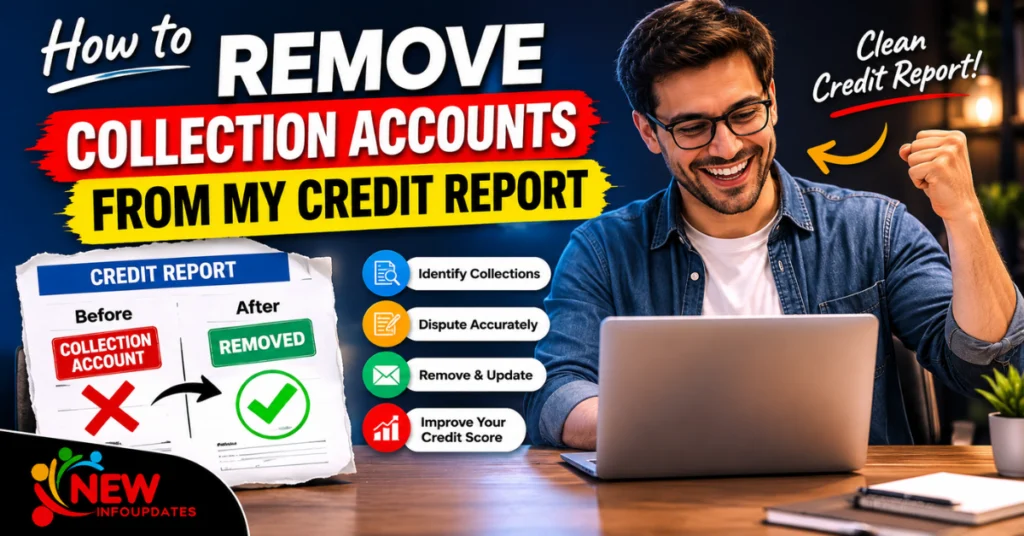
How to Remove Collection Accounts From My Credit Report
Many people ask how to remove collection accounts from my credit report after finding a collection account on their credit history. Collections can lower your credit score and make it harder to get approved for loans or credit cards. The good news is that some collection accounts can be removed legally. The first step is to get a copy of your credit report and review it carefully. Check every account. Look for mistakes. Make sure the collection account really belongs to you.
Look for:
- Wrong account balances
- Incorrect dates
- Accounts that do not belong to you
- Duplicate collection entries
If you find errors, you can dispute them with the credit bureau.
If the information cannot be verified, the collection may be removed.
Check for Credit Report Errors
Mistakes happen more often than many people think.
- Review every detail.
- Check names.
- Check account numbers.
- Check payment records.
- If something looks wrong, file a dispute.
- Credit bureaus must investigate disputed information.
If the information is inaccurate, it may be deleted from your report.
How to Delete Collection Accounts Legally
Many people want to know how to delete collection accounts legally after seeing them on a credit report. Collection accounts can lower your credit score and affect your financial opportunities.
- The most important rule is to use legal methods only.
- Never use fake documents.
- Never provide false information.
Legal ways include:
- Disputing incorrect information
- Requesting debt validation
- Negotiating with collectors
- Paying valid debts
Request Debt Validation
If a collection account appears on your report, ask the collection agency to validate the debt.
Debt validation means proving:
- The debt is yours
- The amount is correct
- The collector has the right to collect it
If the collector cannot provide proof, the account may need to be removed.
This is an important step when learning how to fix collections on credit report.
Negotiate a Pay-for-Delete Agreement
Some collection agencies may agree to remove a collection account after receiving payment.
- This is called a pay-for-delete agreement.
- Always get the agreement in writing before sending money.
- Not all collection agencies offer this option.
- However, it may help in some situations.
Pay Outstanding Collections
Paying a valid debt will not always remove the collection account immediately.
- However, it can improve your financial standing.
- Lenders often prefer paid collections over unpaid collections.
- A paid account looks better than an unpaid one.
- Paying debts also helps prevent further collection actions.
Wait for the Collection to Expire
In many cases, collection accounts automatically fall off your credit report after the reporting period ends. Although this option takes time, it may still improve your credit score eventually.
How to Fix Collections on Credit Report
People often ask how to fix collections on credit reports.
The process usually involves several steps:
- Review your credit report
- Identify errors
- Dispute incorrect accounts
- Validate collection debts
- Pay legitimate debts
- Monitor your credit regularly

Can Paid Collections Be Removed?
Paid collections may still appear on your credit report depending on credit bureau policies..
Many consumers search for:
- remove paid collections from credit report
- collection removal tips
- improve credit score after collections
- credit repair for collections
- remove debt from credit history
- fix bad credit fast
- credit report cleanup methods
Best Way to Remove Collections From Credit Report
The best way to remove collections from credit reports depends on your situation.
If the collection is incorrect:
- Dispute it immediately
If the debt cannot be verified:
- Request removal
If the debt is valid:
- Consider negotiating
- Pay the balance if possible
There is no single solution for every case.
The best approach is the one that fits your specific situation.
Tips to Prevent Future Collections
Avoiding collections is easier than removing them.
Here are some simple tips:
- Pay bills on time
- Create a monthly budget
- Track due dates
- Keep emergency savings
- Check your credit report regularly
Common Mistakes to Avoid
Many people make mistakes when dealing with collections.
- Ignoring collection notices
- Paying without verifying the debt
- Believing every collection is accurate
- Using illegal credit repair methods
- Not checking credit reports regularly
Smart actions can save time and money.
Why Credit Reports Matter
Your credit report affects many financial opportunities.
A strong report can help you:
- Get approved for loans
- Qualify for credit cards
- Rent an apartment
- Receive better interest rates
Keeping your report accurate is very important.
Conclusion
Removing Collections can hurt your credit. They can stay on your credit report for years. This may make borrowing money harder. The good news is that collections can often be managed. Some can even be removed. The first step is to check your credit report carefully. Look for mistakes. Check account details. Make sure the debt is really yours. Errors can happen. Incorrect information should be disputed right away.
Always know your rights. Collection agencies must follow the law. They must prove a debt belongs to you if you ask for validation. If they cannot verify the debt, it may be removed from your report.